You might think, “Why should I bother with crawlspace encapsulation if I never use that area?” It’s a valid question, and the answer may surprise you. Encapsulation is not just about making unused space useful; it’s a preventive measure to protect your home from potential damage. It can shield your home from harmful elements like moisture, mold, and pests, and even enhance the energy efficiency of your home. But, is it a worthy investment for everyone? Let’s further explore this topic to help you make an informed decision.
Key Takeaways
- Even if unused, crawlspaces impact home health, affecting air quality and structural integrity.
- Encapsulation improves indoor air quality by preventing moisture and harmful gases from entering the home.
- Encapsulation mitigates risks of structural damage and pest infestations, irrespective of crawlspace usage.
- Regular crawlspace inspections are crucial to maintain home health, whether the space is used or not.
- Improved energy efficiency resulting from encapsulation benefits the whole home, not just the crawlspace.
Understanding Crawlspace Encapsulation
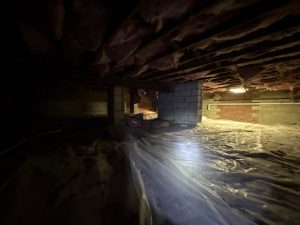 Diving into the world of home maintenance, it’s crucial to understand crawlspace encapsulation. It’s a process where you seal off your crawlspace from the outside elements, creating an environment that’s moisture-free and clean.
Imagine wrapping your crawlspace in a protective layer; that’s fundamentally what encapsulation does.
You might wonder why encapsulation matters, especially if you don’t use the space. Well, it’s not about usage, it’s about protection. Even if you’re not regularly venturing into your crawlspace, moisture can.
And where there’s moisture, there’s a risk of mold, mildew, and insect infestations. This could lead to structural damage and poor air quality in your home.
Encapsulation might seem like a big project, but it’s a worthwhile investment. It can increase the lifespan of your home, reduce energy costs, and create a healthier living environment.
You’ll need some specific equipment and materials, like a vapor barrier and possibly a dehumidifier, but don’t let that deter you.
With a little research and some elbow grease, you can tackle crawlspace encapsulation and give your home the protection it deserves.
The Role of Crawlspaces in a Home
Before we move forward, it’s important to grasp why crawlspaces exist in the first place. You might think of them as just empty spaces beneath your home, but they serve critical functions that shouldn’t be overlooked.
First, crawlspaces provide easy access to the underside of your home, making it possible to install, inspect, and repair plumbing, electrical wiring, and HVAC systems. Without this space, any maintenance or repairs would be far more challenging and costly.
Secondly, they’re designed to elevate your home off the ground, protecting it from dampness, pests, and in some areas, even flooding.
Here are the key roles of crawlspaces summarized:
- Providing access for maintenance and repair
- Protecting the home from ground moisture
- Serving as a barrier against pests
- Elevating the home to prevent flooding
You mightn’t use your crawlspace, but that doesn’t mean it’s not working for you. It’s like a silent partner, doing its job without any recognition.
But just because it’s out of sight, doesn’t mean it should be out of mind. We’ll explore why in our next section, “Unseen Dangers of Neglected Crawlspaces.”
Unseen Dangers of Neglected Crawlspaces
While you might not often think about your home’s crawlspace, neglecting it can lead to serious issues down the line. It’s easy to dismiss what you can’t see, but unseen doesn’t mean harmless. Let’s consider a few dangers lurking beneath your house.
| Issue | Consequence | Solution |
|---|---|---|
| Moisture | Causes mold growth and structural damage | Regular inspection and maintenance |
| Pests | Damage structures and spread diseases | Pest control and crawlspace sealing |
| Poor Insulation | Energy inefficiency leading to higher bills | Insulation checks and upgrades |
Moisture in your crawlspace can foster the growth of mold, which can damage your home’s structure and cause health issues. Pests such as rodents and insects find neglected crawlspaces to be perfect homes, causing structural damage and potentially spreading diseases. Finally, a poorly insulated crawlspace can lead to energy inefficiency, causing you to spend more on heating and cooling.
Benefits of Crawlspace Encapsulation
Addressing these issues proactively is a smart move, and that’s where crawlspace encapsulation comes into play. This method, often overlooked, offers a multitude of benefits even if you don’t use the space.
First and foremost, encapsulation improves the overall air quality in your home. It seals off the crawlspace, preventing harmful gases, moisture, and pests from infiltrating your living space. This leads to a healthier and safer environment for you and your loved ones.
The benefits don’t stop there. Here’s a quick rundown of what encapsulation can do for your home:
- Mitigate the risk of structural damage: By controlling moisture, encapsulation protects the wood and metals in your crawlspace from rust and rot.
- Improve indoor comfort: With the reduction of humidity, your home’s climate becomes easier to control.
- Enhance home value: An encapsulated crawlspace is an attractive feature for potential home buyers.
- Reduce pest infestations: Sealing the crawlspace helps keep out unwanted critters.
In the end, it’s not just about the unused space. It’s about the overall health and comfort of your home.
Impact on Energy Efficiency
Energy efficiency, a major concern for any homeowner, receives a significant boost from crawlspace encapsulation. You might be wondering how a part of your home that you don’t use can affect your energy usage, right? Well, let’s break it down.
Your crawlspace, if not properly encapsulated, can be a major energy drain. Unconditioned air can seep into your home through your crawlspace, forcing your heating and cooling system to work harder. This means higher energy bills and more wear and tear on your HVAC system.
But with crawlspace encapsulation, you’re creating a barrier. It stops this air infiltration, keeping your home’s temperature more stable.
You’ll notice that your heating and cooling system doesn’t have to kick in as often, which not only reduces your energy usage but extends the life of your HVAC system. And who doesn’t want to save on those costly repairs or replacements?
Improving Indoor Air Quality
Not only does crawlspace encapsulation help keep your energy bills in check, it also plays a significant role in improving your home’s indoor air quality.
Did you know that a significant portion of the air you breathe indoors comes from your crawlspace? Consequently, if your crawlspace is damp and moldy, you’re likely breathing in unhealthy air.
Encapsulating your crawlspace aids in controlling the moisture level, reducing the possibility of molds and mildews. This results in cleaner, healthier air circulation in your home.
Here are some benefits of crawlspace encapsulation for indoor air quality:
- Reduction in musty odors: By controlling moisture, encapsulation eliminates the root cause of musty smells.
- Less allergens: Encapsulation prevents the growth of mold and mildew, reducing allergy-triggering spores.
- Fewer pests: A dry, encapsulated crawlspace is less attractive to pests, reducing droppings that can trigger allergies or asthma.
- Improved HVAC efficiency: Cleaner air means your HVAC system doesn’t have to work as hard, boosting its efficiency.
Cost and Time Investment for Encapsulation
Investing in crawlspace encapsulation might initially seem like a hefty financial commitment. It’s not, however, as intimidating as it appears. The cost can range from $1,500 to $15,000, depending on the size and condition of your crawlspace.
You might balk at the higher end of the scale, but remember, this is an investment in your home’s longevity and your family’s health.
You’re not just paying for materials, you’re also investing in skilled labor. Professionals need to clean the area, lay down a vapor barrier, seal vents, and insulate walls. This process takes time. It could be a few days for a small, clean area or a couple of weeks for a larger, damp crawlspace.
But don’t let the cost and time investment deter you. Consider it as a long-term solution that’ll save you money down the line.
By encapsulating your crawlspace, you’re preventing potential damage from moisture and pests, reducing energy bills, and improving indoor air quality.
Factors to Consider Before Encapsulation
Before you make the decision to encapsulate your crawlspace, several factors need careful consideration. This isn’t a decision to be taken lightly; it’s imperative you think through all aspects thoroughly.
 To help you in this process, here are some key points to keep in mind:
- Moisture Levels: If your crawlspace is regularly damp or flooded, encapsulation can protect your home from damage, mold, and pests.
But if it’s dry, it may not be necessary at all.
- Current Insulation: Check the state of your current insulation. If it’s in good condition, you mightn’t need to encapsulate.
But if it’s deteriorating, encapsulation could be a good option.
- Energy Efficiency: Encapsulation can improve your home’s energy efficiency by preventing air leaks.
Consider your energy bills and whether they could benefit from this upgrade.
- Pest Problems: If you’ve had issues with pests, encapsulation could help deter them from invading your crawlspace.
Professional vs. DIY Encapsulation
When it comes to encapsulating your crawlspace, you might find yourself torn between hiring a professional or doing it yourself. Each option has its own merits, but it’s important to evaluate your specific situation.
Hiring a professional guarantees the job’s done right the first time. They’ve been trained to handle unexpected issues and have access to high-quality materials. It could save you a lot of time and stress.
However, this comes with a higher cost, which might be a deterrent if you’re on a tight budget.
On the other hand, DIY encapsulation can be more cost-effective. If you’re hands-on and have some basic DIY skills, you might be up for the challenge.
You’ll need to research the best materials to use, and learn the process. It can be time-consuming, but it could save you money.
However, remember that poorly executed encapsulation could lead to problems down the line, costing more in the long run.
So, even if you don’t use your crawlspace, encapsulation is definitely worth considering. It safeguards your home from unseen threats like moisture, mold, and pests. Plus, it boosts energy efficiency and improves air quality. While it may require an investment of time and money, it can save you from costly repairs down the road. Whether you opt for professional service or a DIY project, crawlspace encapsulation offers a host of benefits.